
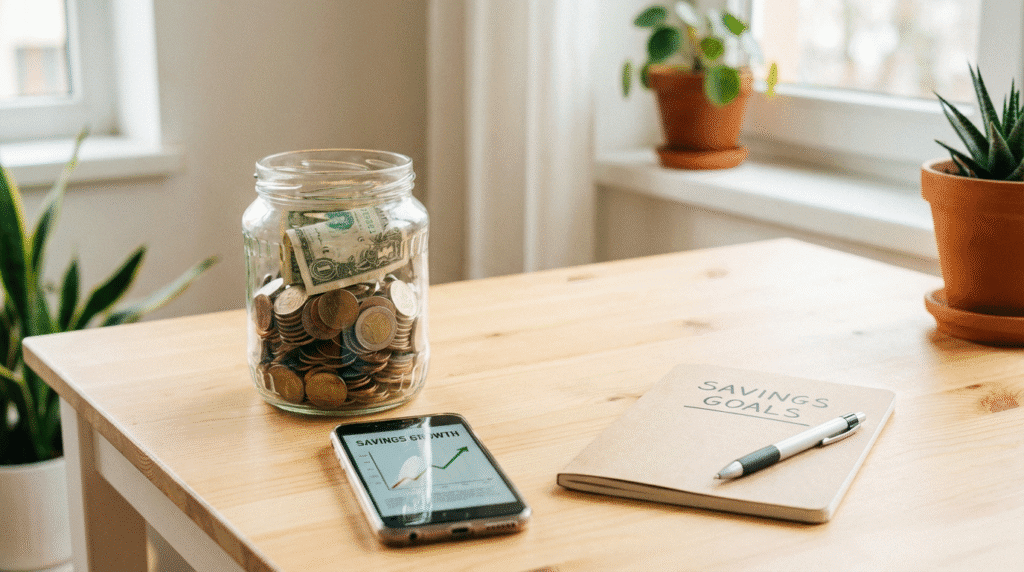
You can start saving money today without living on instant noodles or cancelling every joy in your life. The key in 2026 isn’t extreme sacrifice—it’s fixing the small leaks that quietly drain your bank account every month.
Here are 10 realistic money‑saving tips you can put into action right now, even if you hate budgeting.
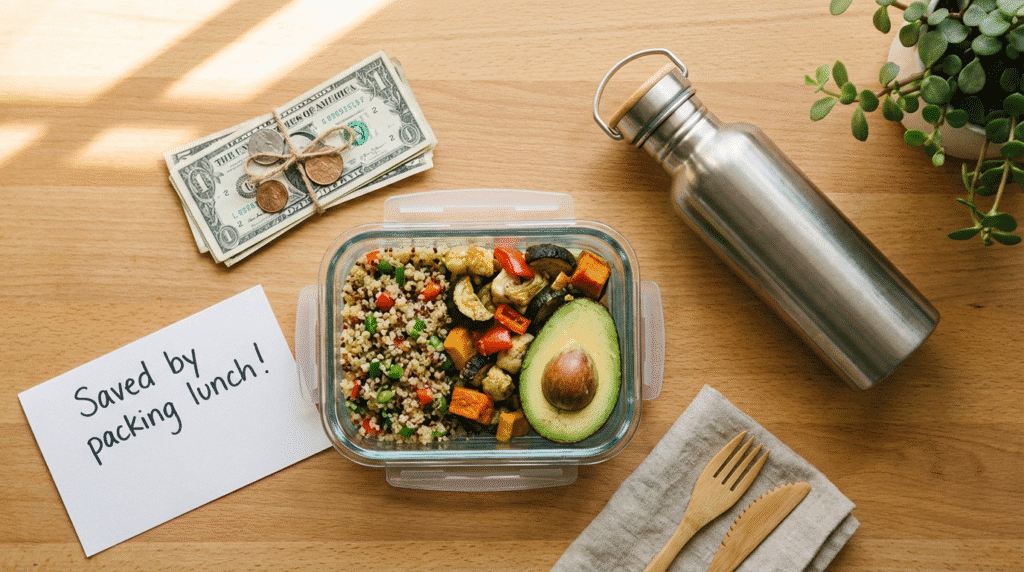
1. Give Every Dollar a Simple Job (Before You Spend It)
Most people spend first and “see what’s left” for saving later. That almost always leads to: nothing left.
Instead, flip the process:
- As soon as money hits your account, divide it into simple buckets:
- Must‑pay bills (rent, utilities, transport, minimum debt payments)
- Essentials (food, basic toiletries)
- Fun (eating out, hobbies, entertainment)
- Savings (emergency fund, goals)
You don’t need complex software; a simple note in your phone like:
“This paycheck: $X for bills, $Y for food, $Z for fun, $N for savings.”
Knowing what each dollar is meant for helps you stop random spending and makes every small saving feel like progress, not punishment.
2. Automate a Tiny Savings Transfer
If you wait to save “whatever’s left at the end of the month,” you’ll rarely save anything.
Set up a recurring transfer from your main account to a separate savings account:
- Start very small if money’s tight:
- $5 every week
- or $20 every payday
- Schedule it for the day after you’re paid
- Use a separate bank or savings account so it’s not too easy to move it back
You can always increase it later, but the habit matters more than the amount at first. In a year, even $10/week becomes over $500 you might otherwise have spent without noticing.
3. Do a 30-Minute Subscription Audit
In 2026, subscriptions might be your biggest “invisible” expense: streaming services, music, games, apps, storage, fitness, etc.
Take 30 minutes and:
- Open your bank/credit card statement.
- List every recurring charge for the last 2–3 months.
- Mark each subscription as:
- Essential (you truly use it weekly or more)
- Nice to have
- Barely used / forgotten
Then:
- Cancel at least one “barely used” subscription today.
- For the “nice to have” ones, set a reminder in 30 days: if you still use and enjoy it, keep it; if not, cancel.
You may easily free up $20–$100 a month in under half an hour.
4. Swap One Takeout/Delivery per Week for a Simple Home Meal
You don’t have to stop eating out completely. Instead, shave off just one order per week.
Example:
- Usual delivery: $18–$30 including fees and tips
- Simple cooked-at-home meal: $4–$7 per person
Savings: $10–$20 a week → $500–$1,000 a year from one small change.
To make it easy:
- Keep two or three “lazy meals” always stocked:
- Pasta + jarred sauce + frozen veggies
- Rice + frozen stir-fry mix + soy sauce
- Eggs + bread + basic veggies for an omelette
- Reserve these for the exact moments you’d usually order in: late, tired, or lazy evenings.
5. Use the 24-Hour Rule for Online Shopping
In 2026, with one‑click buying and personalized ads, impulse spending online is a major money drain.
Add one small speed bump:
- When you want to buy something that isn’t essential:
- Add it to your cart or wish list.
- Wait at least 24 hours before checking out.
- For more expensive items (over your personal limit—say $100), wait 3–7 days.
Ask yourself after the wait:
- Do I still really want/need this?
- Do I have something that already does the job?
- Will this matter to me a month from now?
You’ll be surprised how many “must-haves” suddenly don’t matter after a pause.
6. Make Your Bills Ask for Justification
Some bills creep up every year without you noticing. Start questioning them.
Step 1: Compare and question
Pick one recurring bill:
- Internet
- Phone plan
- Insurance
- Streaming package
Then:
- Check competitors’ prices and offers.
- Call or chat with your current provider and say something like:“I’m reviewing my monthly expenses and found better offers from other providers. Is there a way to lower my bill or move me to a more affordable plan?”
Many companies have retention offers they never mention unless you ask.
Step 2: Downgrade where possible
- Internet speeds: do you really need the highest tier?
- Phone data: could you drop to a smaller plan and use Wi‑Fi more?
- Insurance: can you raise deductibles slightly to lower premiums?
Even a $10–$20 cut per bill adds up when you repeat this every 6–12 months.
7. Give Every Purchase a “Time Cost” Test

Instead of thinking in dollars, translate prices into hours of your life.
Formula:
Price of item ÷ your hourly take‑home pay = hours you must work for it
Example:
- You earn $15/hour after tax
- A $90 pair of shoes = 6 hours of work
Ask:
- Is this worth 6 hours of my life?
- Would I still want it if I had to work those extra hours just for this?
This mental shift alone slows down emotional spending and makes you more deliberate, without needing a strict budget.
8. Use Technology to Catch “Lazy Spending”
Your phone can either encourage spending (shopping apps, ads, one-click purchases) or help control it.
Turn it into an ally:
- Turn off marketing notifications from shopping apps and email.
- Remove saved cards from websites so checkout isn’t one-tap.
- Use a spending tracker app (or your bank’s built-in categories) to see:
- How much you spent on food delivery
- How much went to “shopping”
- How much went to “transport,” etc.
When you see that you spent $180 on delivery last month, your brain naturally becomes more cautious, even without a strict budget.
9. Plan One “No-Spend Day” Each Week
A no-spend day means:
- No buying food, coffee, snacks, or non-essential items
- No online orders
- Bills and automatic payments are okay, but no extra spending by choice
On that day:
- Eat from what you already have at home
- Use free entertainment: walks, books, YouTube, games you already own, etc.
Even one no-spend day per week can:
- Break your “daily swipe/card tap” habit
- Save an easy $5–$30 a week
- Make you much more aware of your usual “small” purchases
10. Create a Visible “Win Jar” for Your Savings
We often stop saving because the progress feels invisible. Fix that with a tangible reminder.
You can do it two ways:
Physical jar
- Use a jar at home labeled “Money I Didn’t Waste”
- Every time you:
- Skip takeout
- Cancel a subscription
- Use a discount instead of paying full price
Put cash in the jar equal to what you saved (or write the amount on a note and drop it in).
Digital tracking
- Use a simple note or spreadsheet called “Savings Wins”
- Every time you make a different choice, log:
- Date
- What you avoided
- Amount saved
After a month or two, look back. You’ll see proof that small decisions are turning into real money. That emotional reward makes it much easier to keep going.
Bringing It All Together
You don’t have to do all 10 at once. To make this stick:
- Pick 2–3 tips that feel easiest right now.
- Put them into action today:
- Set up the automatic transfer
- Cancel one subscription
- Plan one no-spend day this week
- Once those feel normal, add another tip.
Money-saving isn’t about perfection. It’s about slightly better choices, repeated often, that quietly move you closer to stability and freedom.


Most Respected reader/
Fellow writer,
Mahedi
despite a two liner, you did favour of liking my post today, No. How to repay the debt? I will rewrite the same post & always write elaborately.
Prof Dr Raj or just Raj. 💖❤️💓💛
#1 in #2026 – don’t let bad habits ruin what you want to do. [Use 2026 as a placeholder]