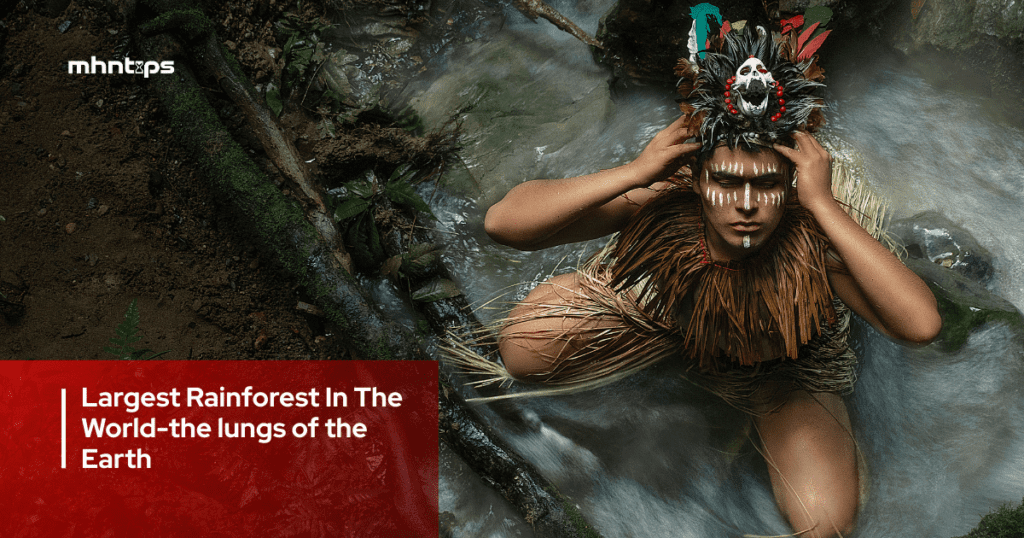
When people talk about “the lungs of the Earth,” they’re usually referring to one place: the Amazon Rainforest. It is the largest rainforest in the world by far, and one of the most important ecosystems on the planet.
This guide explains where it is, how big it really is, why it matters so much, what’s threatening it, and what’s being done to protect it.
What Is a Rainforest, Exactly?
A rainforest is a forest that:
- Receives high rainfall (usually more than 2,000 mm / 80 inches per year)
- Has dense, tall tree cover
- Supports a huge variety of plants, animals, and microorganisms
- Usually has a warm, humid climate (in the case of tropical rainforests)
There are two main types:
- Tropical rainforests – near the equator (e.g., Amazon, Congo)
- Temperate rainforests – in cooler regions with heavy rain (e.g., parts of Chile, Canada, New Zealand)
The Amazon is a tropical rainforest.
The Largest Rainforest in the World: The Amazon
Where Is the Amazon Rainforest?
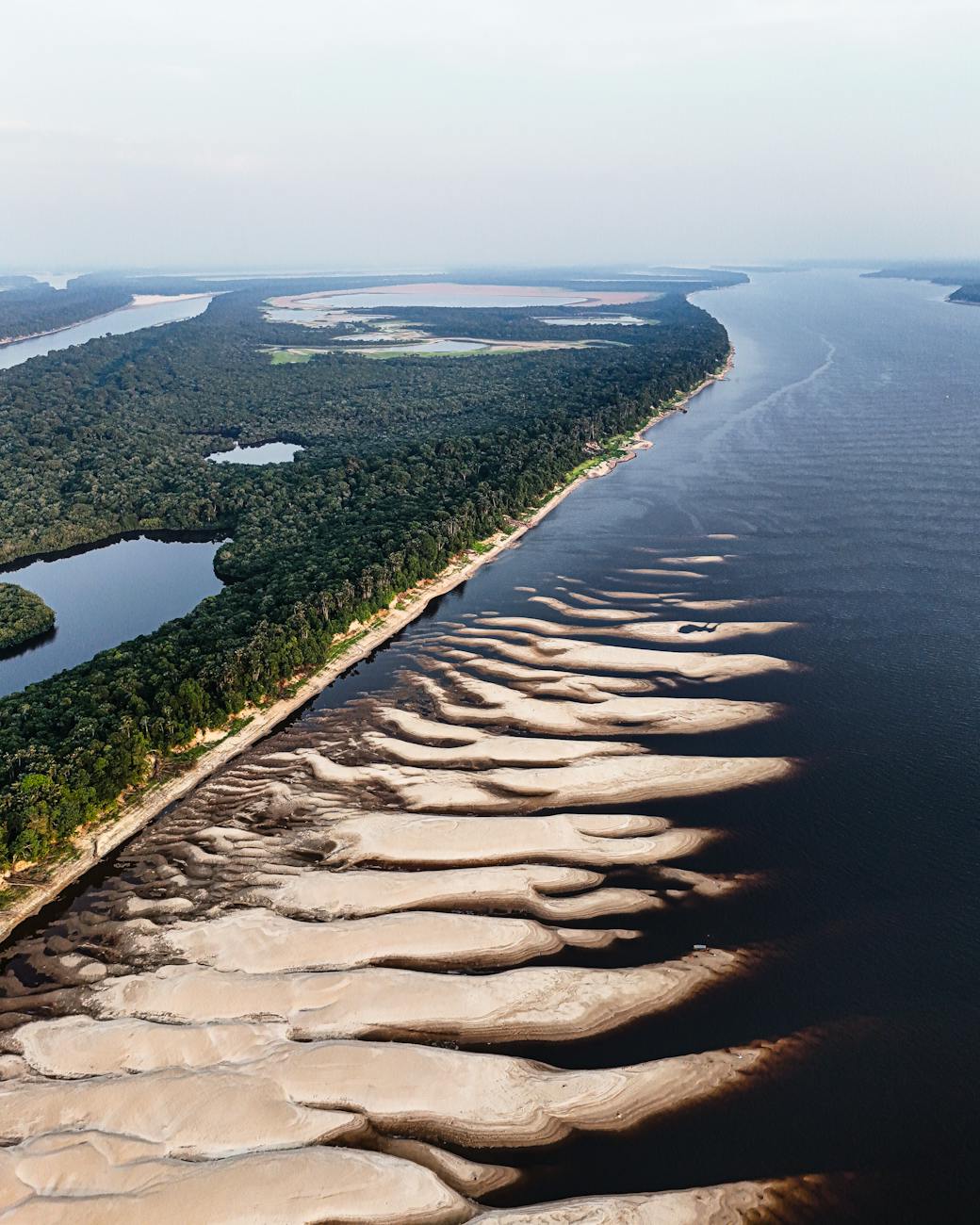
The Amazon Rainforest is located in South America and spreads across 9 countries:
- Brazil (by far the largest share – about 60%)
- Peru
- Colombia
- Venezuela
- Ecuador
- Bolivia
- Guyana
- Suriname
- French Guiana (an overseas department of France)
How Big Is It?
Exact numbers change because of deforestation and new measurements, but estimates are:
- Around 5.5–6 million square kilometers
- That’s about 2.1–2.3 million square miles
- Roughly the size of the contiguous United States or twice the size of India
It is several times larger than the world’s second-largest rainforest.
Why the Amazon Rainforest Is So Important
1. Unmatched Biodiversity
The Amazon is one of the most biologically rich places on Earth.
Scientists estimate:
- Around 10% of all known species on Earth live in the Amazon
- Over 40,000 plant species
- More than 400 mammal species
- Over 1,300 bird species
- Thousands of fish, amphibians, and reptiles
- Millions of insect species – many still undescribed
New species are still being discovered almost every year.
2. Climate Regulation
The Amazon helps regulate the global climate by:
- Storing massive amounts of carbon in its trees, plants, and soils
- Taking in CO₂ (carbon dioxide) from the atmosphere during photosynthesis
- Releasing water vapor into the air, influencing rainfall patterns far beyond South America
When forests are cut down or burned:
- Stored carbon is released back into the atmosphere as CO₂
- This contributes to global warming
3. The Water Cycle and “Flying Rivers”
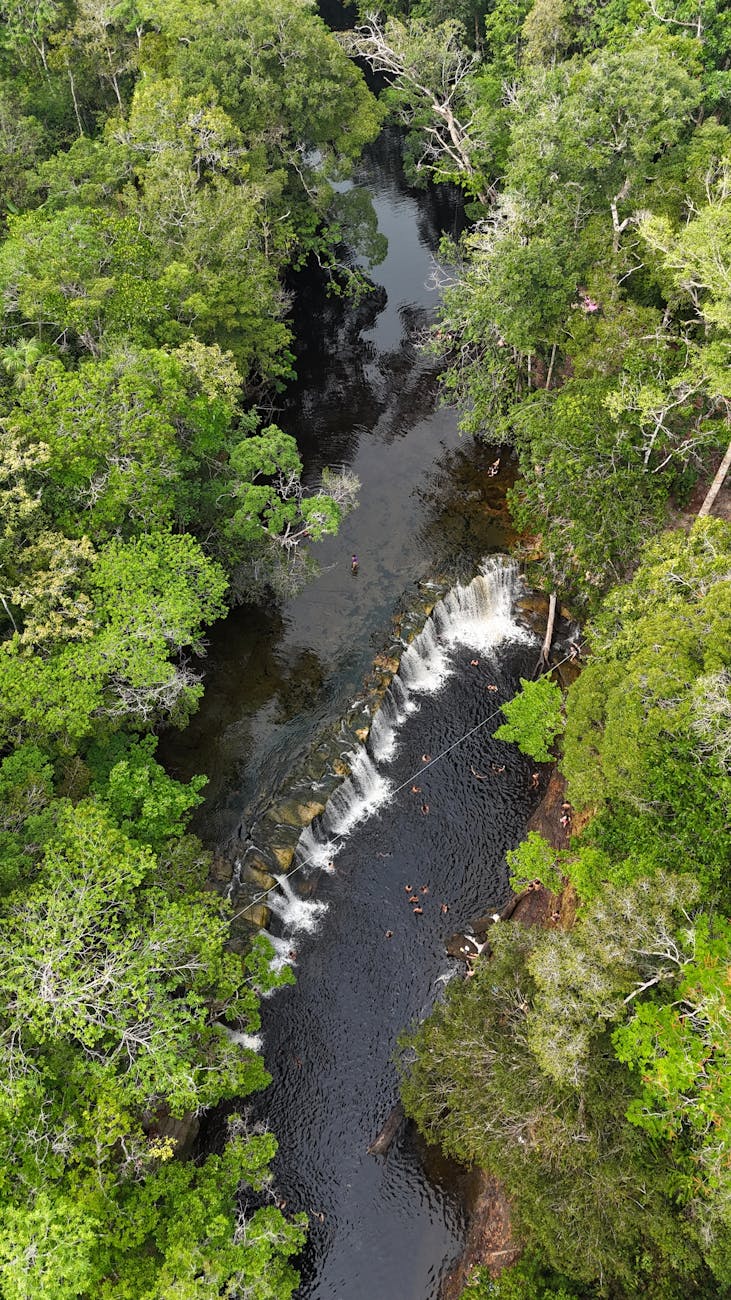
The Amazon doesn’t just receive rain – it creates a lot of it:
- Trees draw up water from the soil and release it into the air through transpiration
- This moisture helps form clouds and rainfall, feeding what scientists call “flying rivers” of water vapor that move across the continent
These processes help:
- Maintain rainfall in the Amazon region
- Influence weather patterns in South America and even beyond
4. Home to Indigenous Peoples and Cultures
The Amazon is home to:
- Over 30 million people
- Including hundreds of Indigenous groups, some of whom live in very remote areas
Many Indigenous communities:
- Have deep knowledge of the forest’s plants and animals
- Depend on the forest for food, medicine, culture, and identity
- Play a key role in protecting and managing the land sustainably when their rights are recognized
5. Natural Pharmacy
Many modern medicines have origins in rainforests, including the Amazon:
- Compounds from Amazonian plants have been used in treatments for malaria, cancer, infections, and more
- Only a small fraction of Amazon species have been studied in detail
Destroying the forest risks losing potential medicines forever.
Is the Amazon Still the Largest Rainforest?
Yes. Even with deforestation, the Amazon is still the largest rainforest in the world by a wide margin.
Other large tropical rainforests include:
The Congo Rainforest (Central Africa)
- Located mainly in Democratic Republic of Congo, plus several neighboring countries
- Second-largest tropical rainforest on Earth
- Estimates: about 1.8–2 million square kilometers
The New Guinea Rainforest (Oceania)
- Spread across Papua New Guinea and Indonesian Papua
- Very high biodiversity and cultural diversity
- Third-largest tropical rainforest region
These are huge and extremely important, but the Amazon is still number one in size.
Threats to the Amazon Rainforest
Despite its size and importance, the Amazon is under serious pressure.
1. Deforestation
Large areas have been cleared for:
- Cattle ranching (one of the biggest drivers)
- Soybean and other crop farming
- Logging (legal and illegal)
- Infrastructure projects – roads, dams, settlements
Deforestation leads to:
- Habitat loss for plants and animals
- Higher greenhouse gas emissions
- Disrupted rainfall patterns
- Increased risk of forest turning into savanna-like ecosystems in some regions
2. Fires
While natural fires are rare in a rainforest, human-set fires are used to:
- Clear land for agriculture
- Maintain pastures
In dry years, these fires can spread into the forest, killing trees and wildlife and releasing huge amounts of smoke and CO₂.
3. Mining and Oil Extraction
Mining for gold, iron ore, and other minerals, as well as oil and gas projects, cause:
- Forest clearing
- River pollution (for example, with mercury in gold mining)
- Social conflicts with local and Indigenous communities
4. Climate Change
Climate change can:
- Make droughts more frequent or severe
- Increase the risk of large fires
- Stress trees and reduce their ability to store carbon
There is concern among scientists that, if too much of the forest is lost, parts of the Amazon might reach a “tipping point”, where they cannot recover and shift permanently to a drier ecosystem.
What Is Being Done to Protect the Amazon?
1. Protected Areas and Indigenous Lands
Many Amazon countries have:
- Created national parks, reserves, and protected areas
- Recognized Indigenous territories, which often have lower deforestation rates when rights are respected
Expanding and enforcing these protections is critical.
2. Stronger Laws and Monitoring
Some countries have:
- Tougher illegal logging and land-grabbing laws
- Satellite monitoring systems that track deforestation almost in real time
These allow authorities and the public to see where forests are being cut and respond more quickly.
3. Sustainable Land Use and Certification
Efforts include:
- Promoting sustainable forestry and agroforestry
- Certification schemes for products like wood, soy, and beef, aiming to keep supply chains deforestation-free
4. International Cooperation
The Amazon’s importance is global, so:
- Other countries and international organizations support conservation funding, research, and climate agreements
- Cross-border initiatives aim to protect large, connected areas of forest
5. Local and Global Activism
- Indigenous communities, local NGOs, scientists, and activists highlight problems and push for change
- Global campaigns raise awareness and pressure companies and governments to act responsibly
What Can Individuals Do?
You may not live near the Amazon, but your choices can still have an impact:
- Reduce demand for products linked to deforestation, such as:
- Unsustainably sourced beef, soy, palm oil, and timber
- Look for certified products (e.g., FSC for wood, RSPO for palm oil, where applicable)
- Support organizations working on:
- Forest conservation
- Indigenous rights
- Climate action
- Reduce your overall environmental footprint:
- Waste less food
- Use energy more efficiently
- Consider your transport and consumption habits
- Stay informed and support policies that protect forests and reduce greenhouse gas emissions
Even small actions, multiplied across millions of people, can help reduce pressure on the world’s biggest rainforest.
Quick Facts: Amazon Rainforest at a Glance
- Type: Tropical rainforest
- Region: South America
- Countries: 9 (Brazil, Peru, Colombia, Venezuela, Ecuador, Bolivia, Guyana, Suriname, French Guiana)
- Approximate area: 5.5–6 million km²
- Species: ~10% of all known species on Earth
- Importance: Biodiversity, climate regulation, water cycle, Indigenous cultures, potential medicines
The Amazon is still the largest rainforest in the world, and what happens there affects all of us. Protecting it is not just a regional issue—it’s a global responsibility.